Best Method in One Minute
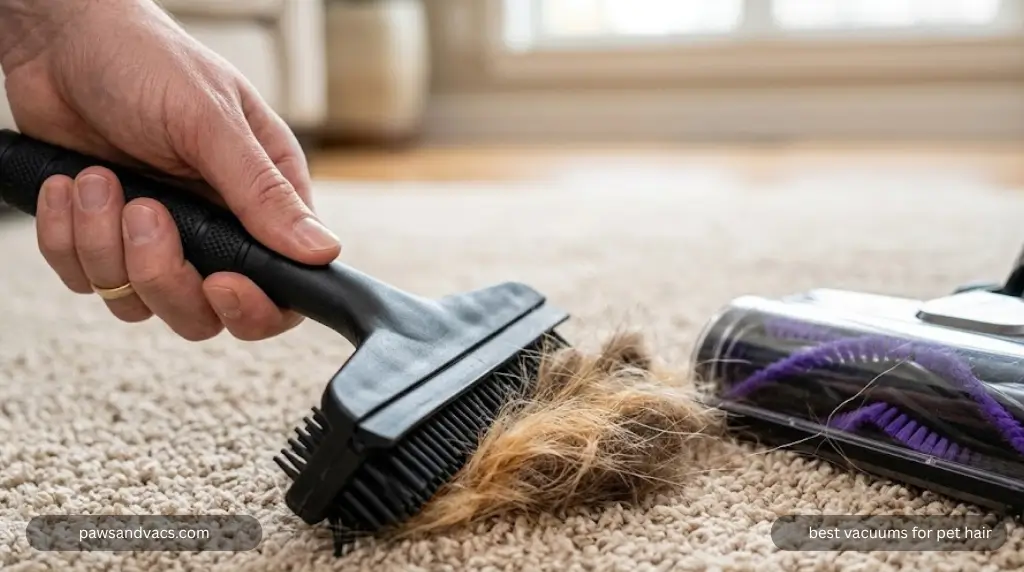
Use a rubber broom or carpet rake first, vacuum slowly in overlapping passes, rotate direction, then finish edges and stairs with a pet upholstery tool. If your current vacuum cannot lift loosened hair, upgrade to the best vacuum for pet hair for your flooring type.
Why Pet Hair Sticks to Carpet
Pet hair is stubborn because it is light, flexible, and static-prone. Dog undercoat and cat fur can weave between carpet yarns, then foot traffic presses it lower. Dry indoor air increases static, making strands cling to synthetic carpet. Oils from skin and dander can make fine hair grab fibers. Once hair is embedded, suction alone often removes only the top layer. The hair deeper in the pile needs friction, agitation, and slow airflow.
The Carpet and Rug Institute recommends slow, steady vacuuming, attention to corners and crevices, and emptying or replacing bags when they are about half to two-thirds full for better vacuum effectiveness. That advice is especially important for pet owners because bulky hair fills bins quickly and chokes airflow before the container looks completely packed.
Tools That Actually Help
Rubber Broom
Rubber creates friction that gathers surface hair into clumps before vacuuming. It is useful on stairs, rugs, hallway lanes, and pet sleeping zones.
Carpet Rake
A carpet rake lifts pile and dislodges embedded hair. Use light pressure, especially on wool, looped, or delicate rugs.
Pet Vacuum
A powered brush roll, anti-tangle design, and strong airflow matter more than a generic upright label. Pet tools are essential for stairs and upholstery.
Lint Roller
Lint rollers are inefficient for whole rooms but excellent for stair edges, small rugs, pet beds, and visible finishing touches before guests arrive.
9 Steps to Remove Pet Hair from Carpet
1. Pick up debris before you start
Remove toys, chews, paper scraps, and larger debris that can block the vacuum. Pet hair often hides under clutter and around bed edges. Clearing the surface also prevents a rubber broom or rake from dragging grit through the fibers.
2. Empty the vacuum and check the filter
Start with maximum airflow. Empty the bin, replace a packed bag, and check whether the pre-motor filter is dusty. Pet hair is bulky, and a vacuum that begins the job half full will lose suction quickly. If your vacuum has washable filters, use only fully dry filters before cleaning.
3. Loosen hair with a rubber broom
Work in short strokes toward yourself. You should see hair gather into small rolls or clumps. Do not press so hard that the carpet backing flexes. On low-pile carpet, rubber brooms can remove a surprising amount of hair before the vacuum ever turns on. On plush carpet, use gentler strokes so you lift hair without distorting the pile.
4. Use a carpet rake on embedded zones
For the strip where your dog sleeps or the corner where a cat watches birds, a carpet rake can reach hair the rubber broom misses. Pull in one direction, then vacuum. Avoid aggressive raking on loop carpet because hooked fibers can snag. If you see fuzzing or fiber distortion, stop and switch to a softer rubber tool.
5. Vacuum slowly with overlapping passes
Speed is the enemy. Make one slow forward pass and one slow backward pass, overlapping each lane by a few inches. The brush roll needs time to agitate the fibers, and airflow needs time to move loosened hair up the intake. If the vacuum has height settings, use the lowest setting that still allows smooth movement and airflow.
6. Rotate direction and repeat
Pet hair lies in different directions, especially where pets roll, scratch, and nap. After the first pass, turn 90 degrees and repeat the pattern. This crosshatch method helps release strands that were shielded by the pile direction. It is slower than random vacuuming, but it removes more hair with less frustration.
7. Clean edges with attachments
Hair migrates to baseboards, door thresholds, and corners. Use a crevice tool along edges, then follow with a dusting brush or mini pet tool if your vacuum includes one. Corners are also where dander and dust collect, so edge cleaning improves both appearance and air quality.
8. Treat stairs and rugs separately
Stairs need a powered mini brush or rubber broom because full-size vacuums are awkward and unsafe on steps. For area rugs, check the care label and avoid catching fringe in a beater bar. Vacuum from the center toward the edge, then lift the edge and clean underneath where hair and grit collect.
9. Finish with prevention
Brush pets regularly, wash pet bedding, and place washable runners in favorite lanes. Vacuum high-traffic pet areas daily during heavy shedding, medium-traffic rooms twice weekly, and low-traffic rooms weekly. A five-minute maintenance pass is easier than extracting a month of fur from carpet backing.
Should You Use Baking Soda?
Baking soda can help with odor and may make some hair easier to vacuum, but it is not a magic pet-hair remover. If you use it, sprinkle lightly, let it sit for 10 to 15 minutes, then vacuum thoroughly with a clean filter and empty bin. Do not overapply. Heavy powder can settle into carpet, create residue, and stress vacuum filters. Avoid baking soda on damp carpet, wool rugs without manufacturer approval, or any rug where powder residue would be hard to remove.
How to Reduce Static-Clung Pet Hair
Static gets worse when indoor humidity is very low. A balanced humidity level can make hair less clingy, though you should avoid over-humidifying because moisture can create odor and mold risks. Rubber tools work partly because they exploit static and friction to gather hair into clumps. For small carpeted areas, a lightly damp microfiber cloth can help, but the cloth should be barely damp, not wet. Never soak carpet to remove hair.
Common Mistakes
- Vacuuming too fast: A quick once-over removes visible fuzz but leaves embedded hair behind.
- Waiting until the bin is packed: Hair blocks airflow before the vacuum looks full.
- Ignoring brush-roll wrap: Wrapped hair reduces agitation and can strain the motor.
- Using too much powder: Deodorizing powder and baking soda can become residue if overused.
- Scrubbing delicate rugs: Aggressive raking can damage loops, fringe, and wool fibers.
When Your Vacuum Is the Problem
If loosened hair remains after careful passes, the vacuum may lack airflow, agitation, or sealing. A pet carpet vacuum should have a powered brush roll, good edge pickup, enough bin capacity, and a pet tool for above-floor surfaces. Homes with allergies should also look for sealed HEPA or high-grade exhaust filtration. Our pillar guide to the best vacuum for pet hair compares seven real models and explains which one fits carpet, hard floors, upholstery, and allergy-sensitive homes.
FAQ
Does a squeegee work on carpet pet hair?
Yes, a rubber squeegee can work on low-pile carpet and stairs. Use short strokes to gather hair, then vacuum the clumps. A rubber broom is more comfortable for larger rooms.
Can pet hair damage carpet?
Hair itself usually does not damage carpet, but the grit, dander, and oils mixed with it can contribute to dullness and odor. Regular vacuuming removes abrasive particles before foot traffic grinds them into fibers.
Should I vacuum before or after using a carpet rake?
For embedded hair, rake first, then vacuum. If the surface is covered in loose debris, do a quick vacuum pass first, rake the remaining hair, then vacuum slowly again.