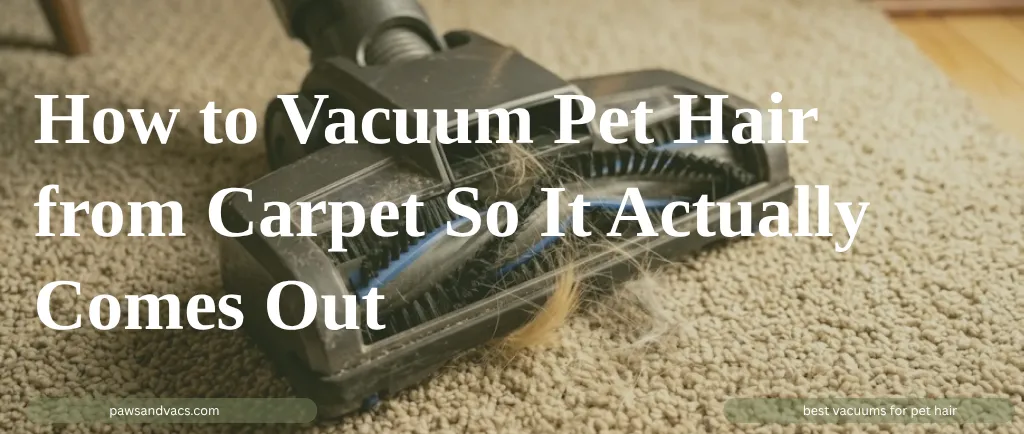
How Do You Vacuum Pet Hair from Carpet So It Actually Comes Out
Use slow overlapping passes, then turn 90 degrees and repeat so the brush roll attacks hair from both pile directions.
- Prepare the medium-pile and low-pile carpet before vacuuming so loose debris does not grind hair deeper.
- Use corded upright with powered brush roll and keep the bin, bag, or filter clean before the first pass.
- Loosen packed fur with rubber broom in pet sleeping zones and traffic lanes.
- Vacuum slowly in overlapping lanes, then repeat from a second direction.
- Finish edges, furniture legs, corners, and transitions with detail tools.
For the broader model-by-model rankings, see our guide to the best vacuum for pet hair.
Why This Pet Hair Problem Happens
The reader wants a practical carpet vacuuming method that removes embedded fur instead of just grooming the surface. The problem is not laziness or a dirty home. Pet hair behaves differently from ordinary dust because it is long, flexible, oily enough to cling, and light enough to move with the vacuum exhaust. On medium-pile and low-pile carpet, the strands can lie in the direction of the pile, hook into texture, or gather at edges where the main cleaner head loses contact.
The specific issue is embedded dog and cat hair that has been pressed below the carpet tips by paws, socks, and furniture legs. Once hair is pressed into a surface, fast vacuuming only removes the loose top layer. The deeper layer needs the brush roll, rubber friction, or a motorized upholstery tool to break contact before suction can move it into the bin. That is why the same vacuum can look impressive on crumbs and still disappoint on fur.
Dander adds a second layer of difficulty. Hair is visible, but dander, pollen, skin flakes, and fine dust travel with it. A routine that removes only the obvious clumps may still leave allergen reservoirs behind in seams, baseboards, carpet backing, and the fabric channels pets use every day.
Tools and Settings That Work
Best Primary Tool
Use a corded upright with powered brush roll because pet hair needs agitation and airflow working together. A passive suction-only nozzle may remove surface fuzz, but it rarely lifts hair that has wrapped around carpet yarns or fabric texture.
Best Prep Tool
A rubber broom gives the vacuum a head start by gathering static-clung hair into visible rows. Prep tools matter most in pet beds, nap zones, hallway lanes, and the first few feet inside exterior doors.
Detail Attachment
A crevice tool is not optional in pet homes. Hair migrates into seams, wall edges, stair lips, seat tracks, and baseboard gaps where the main cleaner head cannot maintain a seal.
Airflow Reset
Start with a clean washable filter. Pet hair carries dander and dust that load filters quickly, and even a strong motor becomes weak when airflow is blocked by packed hair or fine debris.
Step-by-Step Cleaning Method
- Clear the area. Remove toys, loose bedding, food crumbs, and anything that could block the cleaner head or hide a fur mat.
- Reset airflow. Empty the bin or bag, check the filter, and cut hair from the brush roll before the first pass.
- Loosen the hair. Use rubber friction or light raking in the direction that gathers hair into clumps instead of scattering it.
- Vacuum slowly. Move at roughly half your normal speed so the brush roll has time to agitate and the suction path has time to carry hair away.
- Crosshatch the surface. Turn 90 degrees and repeat. Hair that resists one pile direction often releases from another.
- Detail the edges. Use a crevice or upholstery tool around baseboards, stairs, seams, furniture legs, and thresholds.
- Inspect and repeat selectively. Repeat only the zones where hair remains rather than overworking the entire surface.
How to Know the Method Worked
A useful home benchmark is a 3-by-3-foot carpet square: if the second crosshatch pass still fills the bin window with fur, your first pass was moving too quickly or your cleaner head is set too high. This simple check matters because pet hair removal is easy to overestimate. A room can look clean from standing height while the carpet edge, upholstery seam, or bare-floor corner still holds enough hair to reappear as soon as the pet walks through.
Listen to the vacuum as you work. A rising motor pitch often means the airflow path is restricted. A rattling cleaner head may mean debris or hair is wrapped around the brush. Hair trails behind the head usually mean the bin is packed, the filter is loaded, or the tool is moving too fast.
Common Mistakes to Avoid
| Mistake | Why It Fails | Better Fix |
|---|---|---|
| Fast zigzag passes | Hair stays wrapped around fibers because the brush roll gets no dwell time. | Use slow overlapping lanes and repeat from another direction. |
| Starting with a half-full bin | Pet hair bridges across screens and restricts airflow early. | Empty before cleaning fur-heavy rooms. |
| Ignoring edges | Hair migrates to corners and transitions where floorheads lose suction. | Finish with a crevice or upholstery tool. |
| Using wet cleaning first | Moisture can mat hair into fibers and create odor. | Remove dry hair before any damp cleaning. |
When a Better Vacuum Matters
If loosened hair remains after two deliberate crosshatch passes, the vacuum probably lacks carpet agitation or sustained airflow. The right upgrade is not always the most expensive model. Match the vacuum to the surface: strong brush agitation for carpet, soft controlled rollers for bare floors, powered mini tools for upholstery and cars, and sealed filtration when dander symptoms matter.
The main pillar page compares upright, cordless, canister, bagged, and bagless options by suction, bin capacity, HEPA filtration, pet tools, and anti-tangle design. Use it when technique is no longer the limiting factor and you need a better machine for the mess pattern in your home: best vacuum for pet hair.
FAQ
What is the best way to handle embedded dog and cat hair that has been pressed below the carpet tips by paws, socks, and furniture legs?
Loosen the hair first, then vacuum slowly in overlapping passes. Use slow overlapping passes, then turn 90 degrees and repeat so the brush roll attacks hair from both pile directions.
Why does pet hair stay on medium-pile and low-pile carpet after vacuuming?
The usual cause is weak agitation, fast pass speed, a full bin, a clogged filter, or hair wrapped around the brush roll. Pet hair needs friction before suction can carry it away.
Should I use powder before vacuuming pet hair?
Use powders sparingly. A very light odor-control treatment can help in some cases, but too much powder clogs filters and leaves residue. Dry hair removal should come first.
When should I replace my vacuum instead of changing technique?
If loosened hair remains after two deliberate crosshatch passes, the vacuum probably lacks carpet agitation or sustained airflow. At that point, the cleaner head, airflow path, or tool kit is probably mismatched to the pet mess.